
The Beauty Botanist~ Evening Primrose
Narayan *One of my favorite moments in the garden found me in a position that was considerably less than mystical: feet planted about two feet apart, folded completely forward, head near the ground and butt in the air.
I was pulling weeds, trimming, cutting and pruning—doing all the ordinary, unglamorous work required to keep a garden like this alive.
I love working at sunset. First, because it is cooler. Second, because it is cooler. And third, because it is sunset.
It is that brief passage sometimes called the magic hour, when the sun lowers across the horizon and the light bends back through the atmosphere. These are the God frequencies, amplified by as much as 40 percent as day passes into night. Sunset changes a garden. Color deepens. Fragrance travels differently. Plants that have held themselves closed all day begin to move.
Evening primrose is one of them.

These lanky, almost prehistoric-looking plants climb several feet into the air, their long central stalks lined with buds. Every evening, a new succession of golden-yellow flowers opens along them. Each blossom has four broad petals, eight stamens and the plant family’s wonderful cross-shaped, four-branched stigma. They open at dusk, remain through the night and generally fade the following day. This is how evening primrose earned her name.
I had been bent over working for some time when I happened to lift my head. All around me were hundreds of yellow flowers that had not been there thirty minutes earlier.
Suddenly, I was standing—or attempting to stand—in a sea of gold.
The whole garden had changed while I wasn’t looking: the sun setting, the light shifting and hundreds of evening primroses opening together. You could feel their calming presence. It wasn’t merely that the flowers were beautiful. The entire atmosphere had softened.
Going back through years of garden photographs, it is surprisingly difficult to find many images of them in full bloom. Evening primrose does not make photography easy. You have to catch her at precisely the right moment: late enough for the flowers to have opened, but early enough that there is still enough light to photograph them. By the time I notice the garden has turned gold, go inside for the camera and come back out, the sun is already slipping away. The very event I am trying to capture is carrying the light out with it.
There is something wonderfully fitting about that. Evening primrose belongs to a threshold that cannot be held open for long. You have to be there when she opens. Otherwise, all you have is a photograph of the tall green stalks before the flowers—or a dark garden after the moment has passed.
Most people meet evening primrose as an oil inside a capsule or blended into a face cream. I met her first as a living rhythm in the garden.
The Plant That Belongs to the Evening
Common evening primrose, Oenothera biennis, is a North American biennial. In her first year she stays close to the earth, forming a basal rosette. In the second she sends up the tall flowering stalk—sometimes five, six or even seven feet—and begins her nightly performance. She likes open ground and disturbed soil: field edges, roadsides, old garden beds, the slightly unruly places where a less adaptable plant might decline the invitation.
She is often called weedy, which is one of those words humans use for a plant that understands how to live without our permission.
The flowers are fragrant and built for the transitional hours. Their evening opening makes them particularly available to nocturnal moths, while bees and other insects continue visiting in the morning. Rather than producing one grand, static display, the stalk opens progressively over a long season. A flower appears, is pollinated, passes, and leaves a narrow capsule behind while new blossoms continue opening above it.
By late season, those capsules are dry cases crowded with reddish-brown seeds about the size of poppy seeds. The birds adore them. They land on the stalks, crack and worry open the cases, and peck away at the seeds inside.
I leave the stalks standing and let them have at it.
The birds eat some seeds, knock others onto the soil and scatter still more as they move through the garden. Evening primrose is an enthusiastic self-seeder, so the birds become part of the planting process. By the following season, rosettes begin appearing in corners where I never consciously planted them.
That is one of the things I love about her. She does not remain obediently inside a designated garden bed. She moves through the landscape with the birds, finding her own places to rise.
The Medicine Inside the Seed
The famous evening primrose oil does not come from the golden flower. It is pressed from those tiny seeds.
Chemically, evening primrose oil is an omega-6-rich lipid dominated by linoleic acid—typically around 70 to 74 percent—with roughly 8 to 10 percent gamma-linolenic acid, or GLA. Smaller portions include oleic, palmitic and stearic acids, along with minor compounds such as phytosterols, tocopherols and triterpenes. Those quieter constituents matter. A botanical oil is never only its headline fatty acid; it is a composition, not a single note.
Linoleic acid is an essential fatty acid, meaning the body cannot manufacture it and must receive it from outside. In skin, it is part of the lipid architecture that helps the stratum corneum—the outer barrier—hold water while keeping irritants out. Skin deficient in essential fatty acids can become dry, rough, reactive and more permeable. Applied topically, a linoleic-rich oil can support that lipid environment, soften scaling and reduce transepidermal water loss.
GLA is the more unusual part of evening primrose oil. Ordinarily, the body must convert linoleic acid into GLA through an enzyme called delta-6-desaturase. GLA can then be elongated into dihomo-gamma-linolenic acid, or DGLA. DGLA is used to form a family of signaling molecules—including series-1 prostaglandins—that participate in the regulation of inflammatory tone, vascular response and immune signaling.
This is the real reason evening primrose oil became associated with inflammation and female hormonal rhythms. It is not a plant estrogen, and it does not simply push estrogen or progesterone up or down. It supplies fatty-acid substrates the body can use within its own regulatory pathways. “Hormone balancer” is the easy phrase. Regulator is closer, but even that requires context: the oil participates in pathways that touch inflammation, cell membranes and prostaglandin signaling, all of which communicate with endocrine physiology.
Internally, the chemistry is compelling, but the clinical record is not uniform. Small studies have found changes in circulating GLA and DGLA and improvements in certain skin measurements; one randomized study in healthy adults reported improvements in moisture, elasticity, firmness, roughness, fatigue resistance and transepidermal water loss after oral supplementation. Other trials—particularly those testing evening primrose oil as a treatment for eczema, PMS, breast pain or menopausal symptoms—have produced mixed or negative results, and systematic reviews do not support presenting it as a proven treatment for those conditions.
That distinction does not make the oil uninteresting. It makes the story more precise. A nutrient-rich botanical oil may support the condition of skin and the availability of fatty-acid building blocks without behaving like a pharmaceutical cure. The body still determines how those materials are absorbed, converted and used. Individual differences in enzymes, diet, oxidative stress and metabolism help explain why one person may feel a pronounced change while another does not.
Topically, evening primrose oil makes particular sense in formulas for dry, depleted, mature or visibly reactive skin. Linoleic acid contributes to barrier lipids; GLA offers a route into inflammation-modulating lipid chemistry; and the oil’s minor sterols and antioxidants accompany those fatty acids as part of the complete seed matrix. The effect is less about forcing the skin to perform and more about giving compromised skin some of the materials it recognizes.
Because it is highly polyunsaturated, evening primrose oil is also delicate. Those multiple double bonds that make it biologically interesting make it vulnerable to oxidation. Freshness, careful sourcing and protection from heat, light and air are not incidental formulation details. They are part of the medicine.
The Medicine Inside the Flower
The flower is not simply a decorative version of the seed oil. It carries a different phytochemical language.
Research on Oenothera biennis flowers and aerial parts has identified a broad polyphenolic matrix that can include gallic, caffeic, ferulic, p-coumaric and rosmarinic acids; flavonoids and related compounds such as rutin, quercetin and kaempferol derivatives; epicatechin; and hydrolysable tannins, including the larger ellagitannin compounds for which Oenothera species are known.
These are not fatty acids. They are largely antioxidant and astringent plant compounds with their own relationships to oxidation, inflammatory signaling, microbes and tissue tone. Laboratory studies of evening primrose flower extracts have reported free-radical-scavenging activity and reductions in inflammatory mediators. A recent cosmetic study using a 70 percent ethanol flower extract found preliminary effects on markers associated with filaggrin, hyaluronic acid, nitric oxide and prostaglandin E2—suggesting possible relationships with barrier function, hydration and inflammatory signaling.
That work is promising, but it is primarily laboratory evidence, not a large human clinical trial. The flower has been studied far less extensively than the seed oil. I find that exciting rather than disappointing. Traditional plant work has always known that different parts of the same botanical are different medicines. Modern research is only beginning to give us the vocabulary to describe what herbalists have observed in the whole plant.
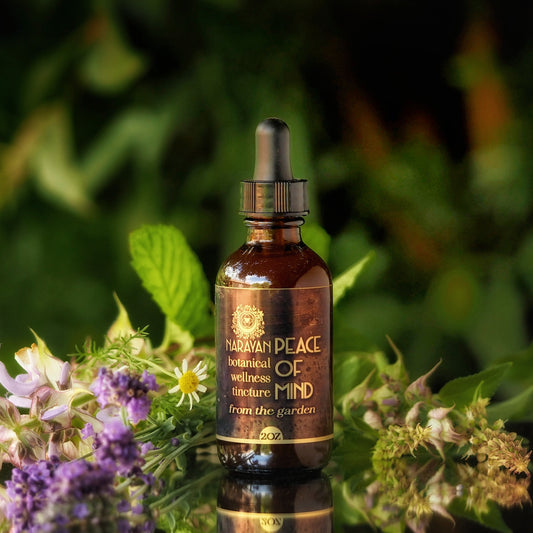
I harvest the flowers themselves and steep them in kombucha for use in several of my tinctures.
Kombucha creates a very different extraction environment from oil. Its water, organic acids and small amount of naturally produced alcohol can meet the flower’s polyphenols, flavonoids, tannins and other polar constituents in ways a lipid extraction cannot. Fermentation can also transform certain plant compounds, although the exact chemistry depends on the culture, acidity, time, temperature and botanical material. I do not treat it as a standardized laboratory extract. It is a living maceration—watched, smelled and known through time.
This is where reductionist ingredient culture misses the plant. If we discuss only GLA, evening primrose becomes a fatty-acid delivery system. If we discuss only one flower flavonoid, she becomes another antioxidant. But the seed, flower, acids, tannins, sterols and pigments are not interchangeable, nor are they isolated notes. Each plant part carries a different chord. Each extraction invites a different portion of the composition forward.
The oil offers the body lipids it can use in membranes, barrier structure and inflammatory signaling. The flower offers a polyphenolic and tannin-rich matrix. My work with evening primrose allows those two expressions to remain distinct while belonging to the same plant story.
The Garden Finishes the Formula
By the end of the season, the luminous flowers are gone. The tall stalks have browned, and the capsules rattle with seeds so small it seems impossible that each one contains the architecture for another towering plant.
Then the birds arrive.
They crack the cases, take what they need and scatter the rest. The winter garden goes quiet. Somewhere beneath the soil, the next generation waits as a low rosette, gathering itself before it rises.
That is evening primrose: a plant governed by thresholds. Day into night. Flower into seed. Seed into oil. Fresh petals into a fermented medicine. A low first-year rosette into a stalk taller than I am.
And every summer, there is a moment when I am bent over working, paying attention to weeds and irrigation and everything I think the garden requires of me. Then I lift my head, and the flowers remind me that the garden has been doing its own work all along.