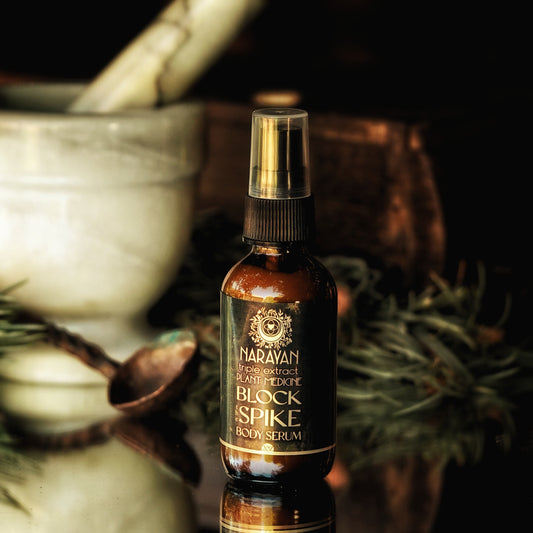

Spike Did Not Disappear
Narayan *Spike Did Not Disappear
What It Is, How It Operates, and Why We Still Need to Talk About It
For a while, it seemed as though everyone was talking about Spike protein.
Then, little by little, the conversation quieted. The emergency declarations ended. People went back to work. The masks came off. The news cycle moved on, and many people decided the whole thing must be over.
It is not over.
I believe the intensity may have subsided, but the underlying issue has not disappeared. People continue to receive the injections, Spike remains part of the conversation, and we continue to watch unusual and aggressive illnesses—including cancers—appear around us.
I do not believe these things should be dismissed simply because the institutions responsible for explaining them insist there is nothing to see.
I have believed from the beginning that COVID and the vaccine were part of a bioweapon program. That is my position. I am not interested in waiting for the government, the pharmaceutical industry, the medical establishment, or the institutions that profited from this crisis to admit what happened.
Why would they?
Telling the truth would require accountability on a scale almost impossible to imagine.
But before we can talk about protecting the body from Spike, we need to understand what a Spike protein actually is.
What Is a Spike Protein?
People ask this all the time:
What exactly is a Spike protein?
The name makes it sound like a vague substance floating around inside the body. It is not.
A Spike protein is a three-dimensional protein structure that protrudes from the outer surface of SARS-CoV-2. These protrusions create the crown-like appearance that gave the coronavirus its name.
But the Spike is not merely decorative.
It is built for attachment.
Think of the Spike protein as a piece of biological machinery covering the outer surface of the so-called virus. Its purpose is to locate a compatible human cell, attach to that cell, and help open the doorway through which viral genetic material can enter.
A simple way to picture it is as a key searching for the correct lock.
That lock is called ACE2.
The ACE2 Connection
ACE2 receptors are found on the surface of many cells throughout the human body. They are present in the airways, lungs, blood vessels, heart, gut, kidneys, and other tissues.
The Spike protein contains two primary working sections: S1 and S2.
The S1 subunit contains the receptor-binding domain. This is the portion that recognizes and attaches to the ACE2 receptor on the surface of a human cell.
That attachment is the first step.
Once the Spike has connected with ACE2, the S2 subunit helps pull the outer membrane of the so-called virus and the membrane of the human cell together. The membranes begin to fuse, creating the conditions for viral genetic material to enter the cell.
S1 finds the doorway.
S2 helps open it.
This is why Spike matters. It is not merely a marker that allows the immune system to recognize the so-called virus. It is the mechanism used for attachment and entry.
What Happens After Attachment?
Once attachment and entry begin, the body recognizes that something foreign has arrived. Immune activity increases. Inflammatory signals are released. Nearby cells receive those signals and alter their own behavior in response.
This reaction is designed to protect us. But when immune and inflammatory signaling becomes excessive, persistent, or misdirected, the effects may reach far beyond the original site of exposure.
Researchers continue to examine the vascular, inflammatory, immune, and tissue-level changes that can follow. But we do not need another decade of carefully managed language to recognize that something profound has happened inside the human body.
We can see that people are not well.
We can see the unexplained inflammation, clotting, exhaustion, neurological changes, heart problems, immune disruption, and aggressive illnesses appearing around us.
We can see the cancers.
I do not believe it is responsible to pretend these changes are occurring in isolation from the largest medical experiment in modern human history.
Spike Is a Tool
The essential thing to understand is this:
Spike is a tool of attachment.
It recognizes.
It binds.
It helps create entry.
It initiates immune recognition and inflammatory signaling.
And because ACE2 receptors are distributed throughout the body, the conversation cannot be reduced to one organ or one symptom. We are talking about a mechanism capable of interacting with cells in many different tissues and systems.
This is why I have continued studying Spike and why I created an entire family of plant medicines around protection, clearing, and restoration.
I did not create them because Spike was fashionable.
I created them because I did not believe this was going away.
We Relaxed—But Spike Did Not
I understand why people stopped talking about it.
We were exhausted.
For years, the subject dominated our lives, divided families, ended friendships, destroyed businesses, and turned the human body into contested territory. People wanted to move on. They wanted to believe the danger had passed and normal life had returned.
But looking away does not neutralize what entered the body.
Silence does not create safety.
And refusing to ask questions does not make the questions disappear.
This is not about living in fear. Fear gives away our power. This is about remaining awake, understanding what we are dealing with, and supporting the intelligence of the body.
The answer is not panic.
The answer is knowledge, discernment, and relationship with the plants that have been protecting human beings for thousands of years.
And this is where the ancient medicine enters the story.
Piñon Pine. Wormwood. Tobacco.
Three powerful plant intelligences, each working through a different doorway. Pine as protector and purifier. Wormwood as the deep-clearing bitter medicine. Tobacco as the ancient guardian with its profound relationship to the body’s receptors.
If Spike is built for attachment, then our next question must be:
How do we protect the doorway—and how do we help the body clear what does not belong?
The Ancient Plants That Answered
If Spike is built for attachment, then our next question must be:
How do we protect the doorway—and how do we help the body clear what does not belong?
My answer began with Piñon Pine.
Long before there was a complete protocol, there was the Hydrosol—the living, aromatic water distilled from wild Piñon Pine. This was where my work with Pine and Spike began.
Piñon Pine is ancient medicine. Its roots reach deep into dry, mineral-rich earth while its branches extend toward the sky. It has survived drought, fire, wind, exposure, and enormous environmental change. It knows how to remain rooted while living between Heaven and Earth.
That intelligence is part of its medicine.
I did not want one product aimed at one symptom. I wanted a complete botanical system that could meet the body through several different pathways: water, tea, tincture, skin, breath, and the energetic field.
The Piñon Pine protocol grew from that vision.
Mist it. Drink it. Take it. Anoint with it. Breathe it.
Piñon Pine Hydrosol
Where the Protocol Began
Piñon Pine Hydrosol carries the water-soluble intelligence of the tree in a light, aromatic mist. It was the beginning of the entire protocol and remains its foundation.
Hydrosols are not simply scented water. They are the living waters created during distillation, carrying the subtle aromatic and botanical components released from the plant.
Mist it over the body. Bring it across the chest. Use it around your field. Breathe in the forest.
This is Pine in its most elemental form: tree, water, breath, and body meeting one another.
The Hydrosol is an uncomplicated place to begin and an easy ally to carry through daily life. It brings Pine into your immediate environment without turning the ritual into another overwhelming regimen.
Peaceful Pine Tea
Drink the Forest
Peaceful Pine Tea brings the protocol inside through warmth, water, and digestion.
It begins with freshly chopped, wild-harvested Piñon Pine and is blended with Star Anise and Sweet Fennel. Each plant contributes something different to the whole.
Piñon Pine brings the strength and respiratory intelligence of the tree.
Star Anise is naturally rich in shikimic acid and has a long relationship with respiratory and immune-supporting traditions.
Sweet Fennel supports digestion, helps move stagnation, and softens the intensity of the deeper clearing plants.
Together, they create a tea that is aromatic, grounding, and deeply connected to the lungs and gut—the places where the outside world meets the inside of the body.
Brew a cup. Let the steam reach your face. Breathe before you drink.
This is not about attacking the body with another harsh protocol. It is about reminding the body that clearing can also be nourishing.
Block the Spike Tincture
The Internal Triad
As the protocol deepened, three plants moved to the center:
Piñon Pine. Wormwood. Tobacco.